Between Alicante and Denia, the Costa Blanca beaches are not all the same. Some stretch for kilometers with a tram stop right on the promenade; others are a small cove with parking for maybe twenty cars, where arriving after nine in the morning in summer means finding no spot at all. Here are six stops along the coast, sorted by who each one actually suits — families, travelers without a car, or anyone chasing genuinely clear water for snorkeling.
Playa de San Juan, Alicante: wide sand and easy access
If you land in Alicante on a morning flight and your hotel is not ready yet, Playa de San Juan is the obvious place to spend the first few hours. It is one of the longest urban beaches on this coast: a wide strip of pale sand, a gentle slope into the water, and full services along its length — showers, sun loungers, lifeguards, cafés at regular intervals. The beach has held Blue Flag status for years, and Alicante’s TRAM line runs right along the seafront, so getting there without a car is genuinely easy, which is rare for a beach this size in the region. For families with young children it is one of the most straightforward options on the whole coast: a gentle entry into the water and lifeguards on duty all season.
Benidorm: Poniente and Levante, briefly
Benidorm’s two city beaches, Poniente and Levante, set the tone for the whole resort stretch of this coast: wide, backed by dense high-rise development right up to the sand, with a full promenade of restaurants and bars. Poniente faces the sunset and sits closer to Altea; Levante faces sunrise and looks out toward the distant Peñón de Ifach rock. Between the two, a rocky headland with a lighthouse makes for a short, scenic walk if you are spending a full beach day in town.
Calpe: Arenal-Bol, the beach right below the rock
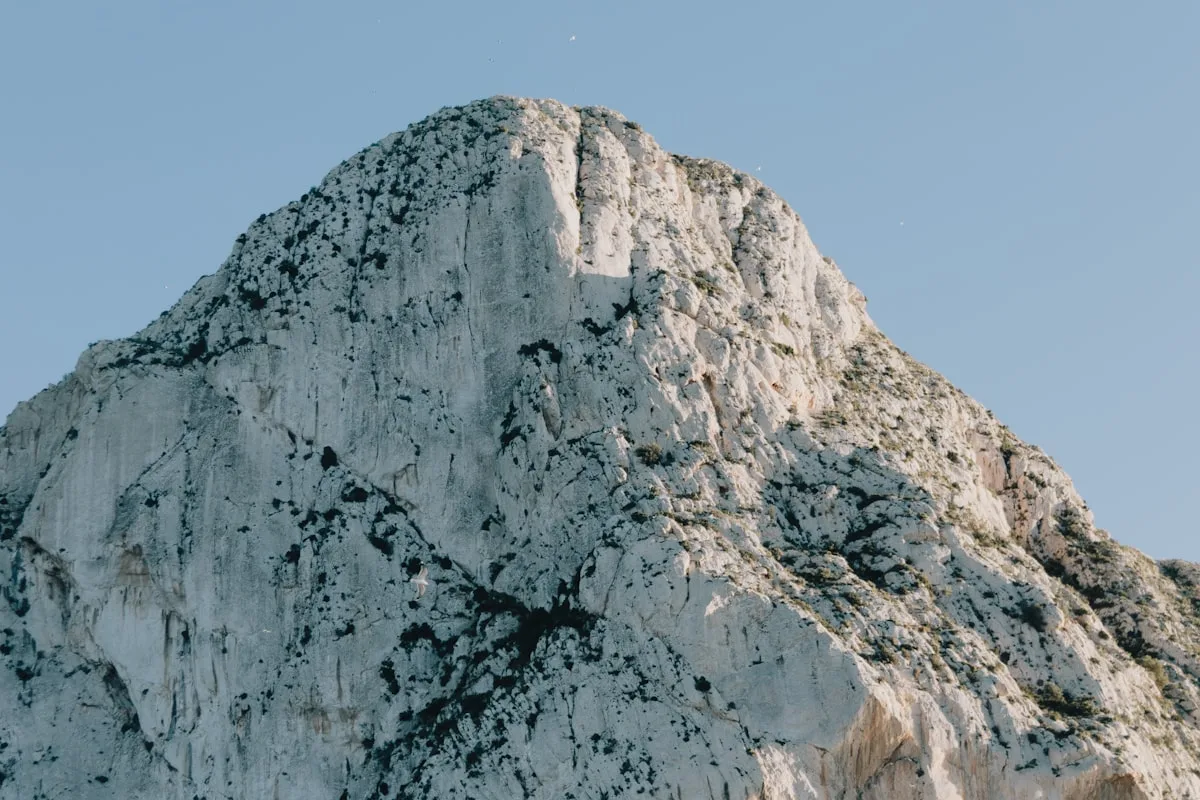
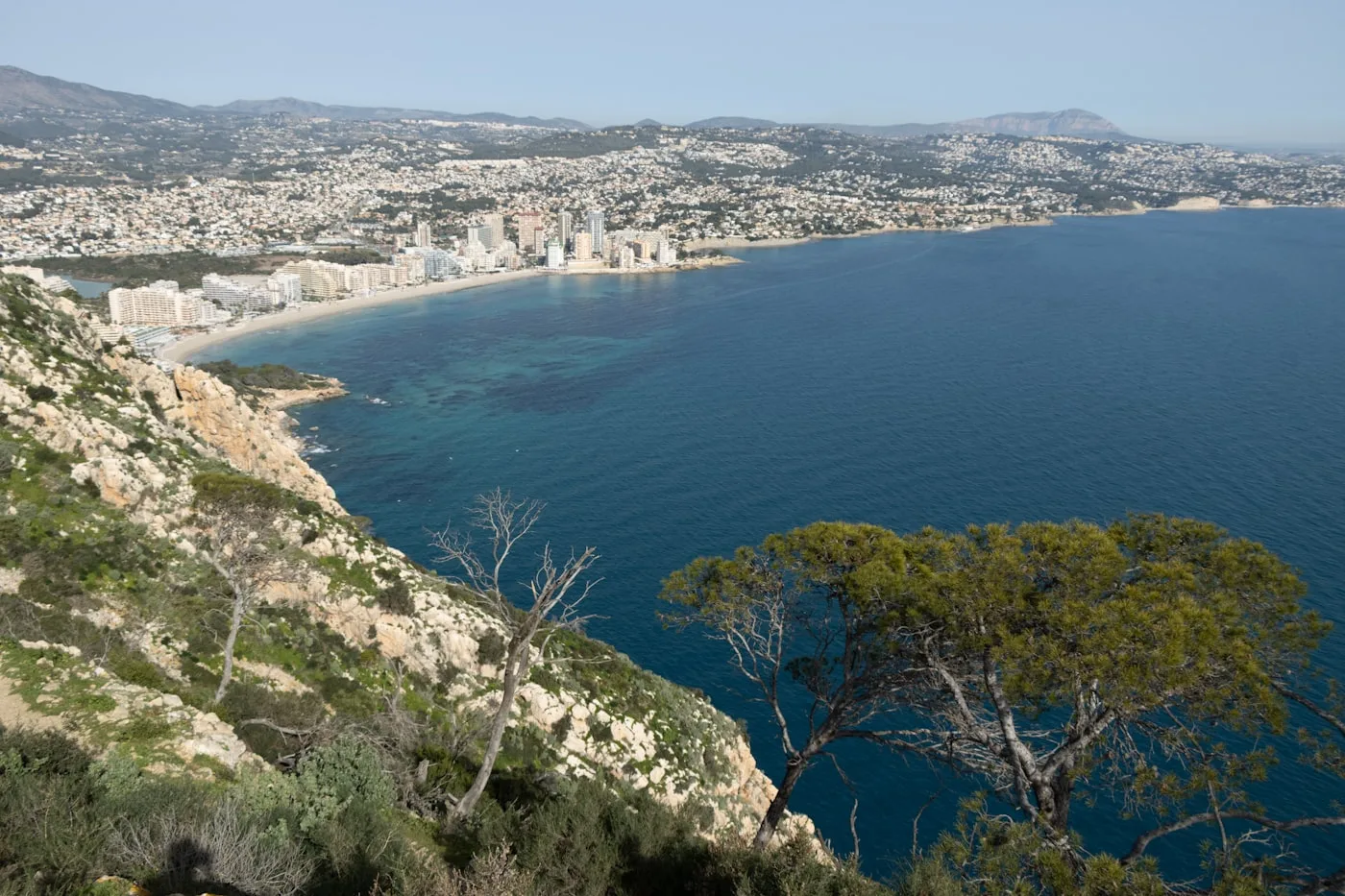
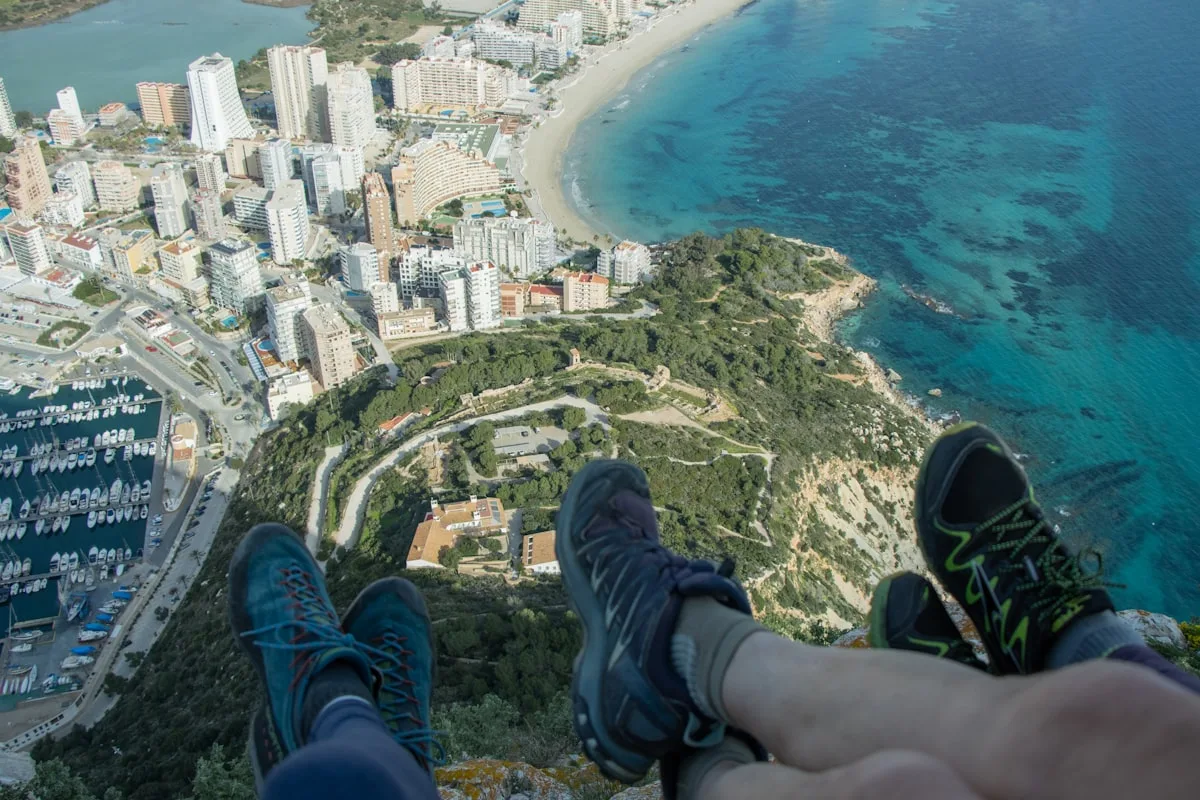
Arenal-Bol is Calpe’s main beach, and its biggest advantage is location: nearly 1.4 km of golden sand starts right in the town center, so it is walkable from almost any hotel or apartment. The Peñón de Ifach rock is visible from practically every point along the shore and looms directly over one end of the beach. The promenade behind it is lined with restaurants for every budget, and the entry into the water is gentle enough for children. It holds Blue Flag status too and gets busy in peak season, especially near the rock, but its length means there is almost always a quieter stretch further along.
El Portet, near Moraira: a cove worth arriving early for
El Portet is a small, enclosed cove between two rocky headlands with some of the clearest water on this part of the coast. It is physically small, and so is its parking — in summer the free spaces near the cove are gone by ten in the morning, after which you are either circling for a spot further away or walking fifteen to twenty minutes from the center of Moraira. For anyone arriving on foot or by taxi, that actually works in their favor, since a car is not needed at all.
Cala Granadella, near Javea: pines and snorkeling
Cala Granadella is a pebble cove backed by pine trees south of Javea, and it takes more effort to reach than most beaches on this list: the access road is narrow and winds down the hillside, and the small paid car park at the top fills up by nine or ten in the morning during peak weeks. In July and August, the practical alternative is leaving the car in Javea and taking the summer shuttle bus down. The reward for the extra effort is some of the clearest water on the coast, well suited to snorkeling — just bring shoes with a sole, since the beach is stone, not sand.
Denia: the beaches north of the harbor, room to spread out
North of Denia’s harbor, toward Oliva, the coastline changes character: long, flat, sandy beaches such as Les Marines, Les Bovetes and Els Molins, running up to Les Deveses, the longest of them all at nearly 3 km. There is simply more room here than in Calpe or Benidorm, even in August, since development along the seafront is lower and the beach itself is noticeably wider. It suits anyone who wants a day without rows of sunbeds packed close together and space to lay out a towel away from the next group; beach bars along the promenade cover the basics.
If you already know which beach you want to start with, mention it when you book your transfer. With a private driver the route is flexible — stopping at Arenal-Bol or in Moraira on the way from the airport, for example, rather than driving straight to the hotel. The price is agreed in advance, the driver meets you with a name sign, and flight delays are tracked at no extra cost, same as on the Alicante–Calpe route. Send us the details on WhatsApp or Telegram, or book directly here — for more Costa Blanca guides like this one, see our blog.