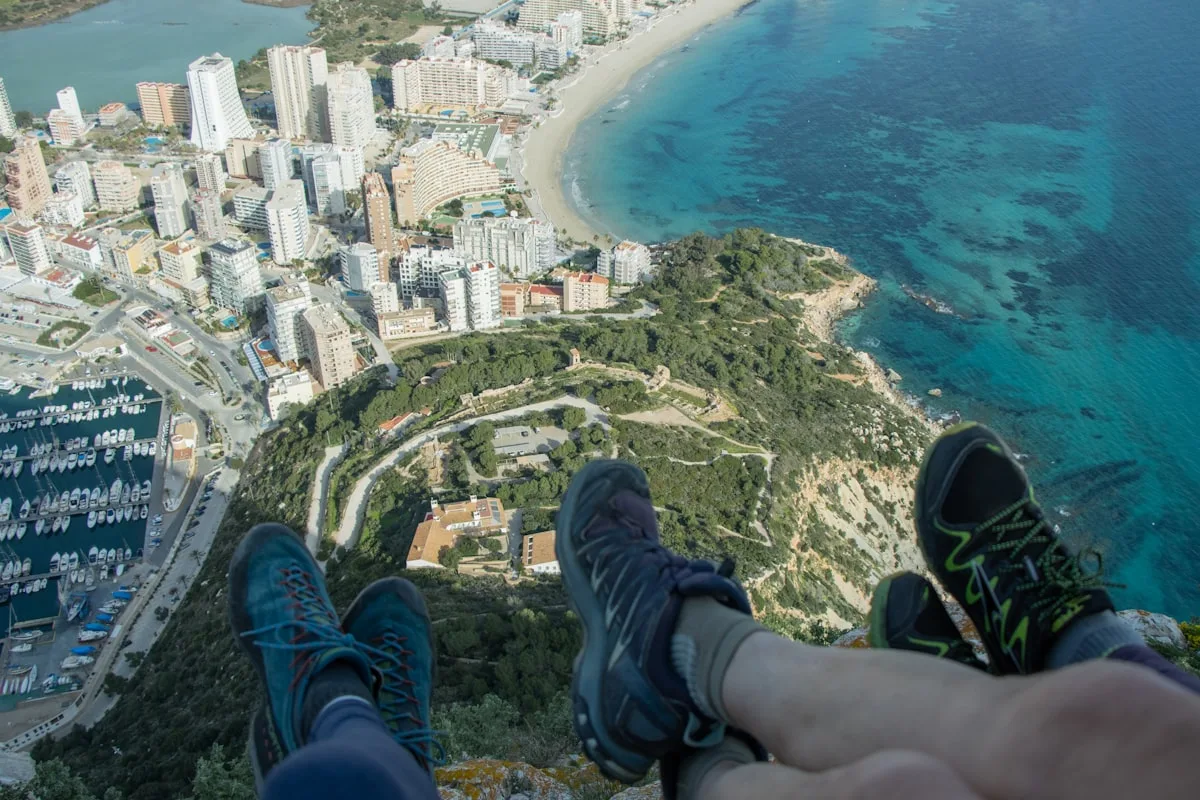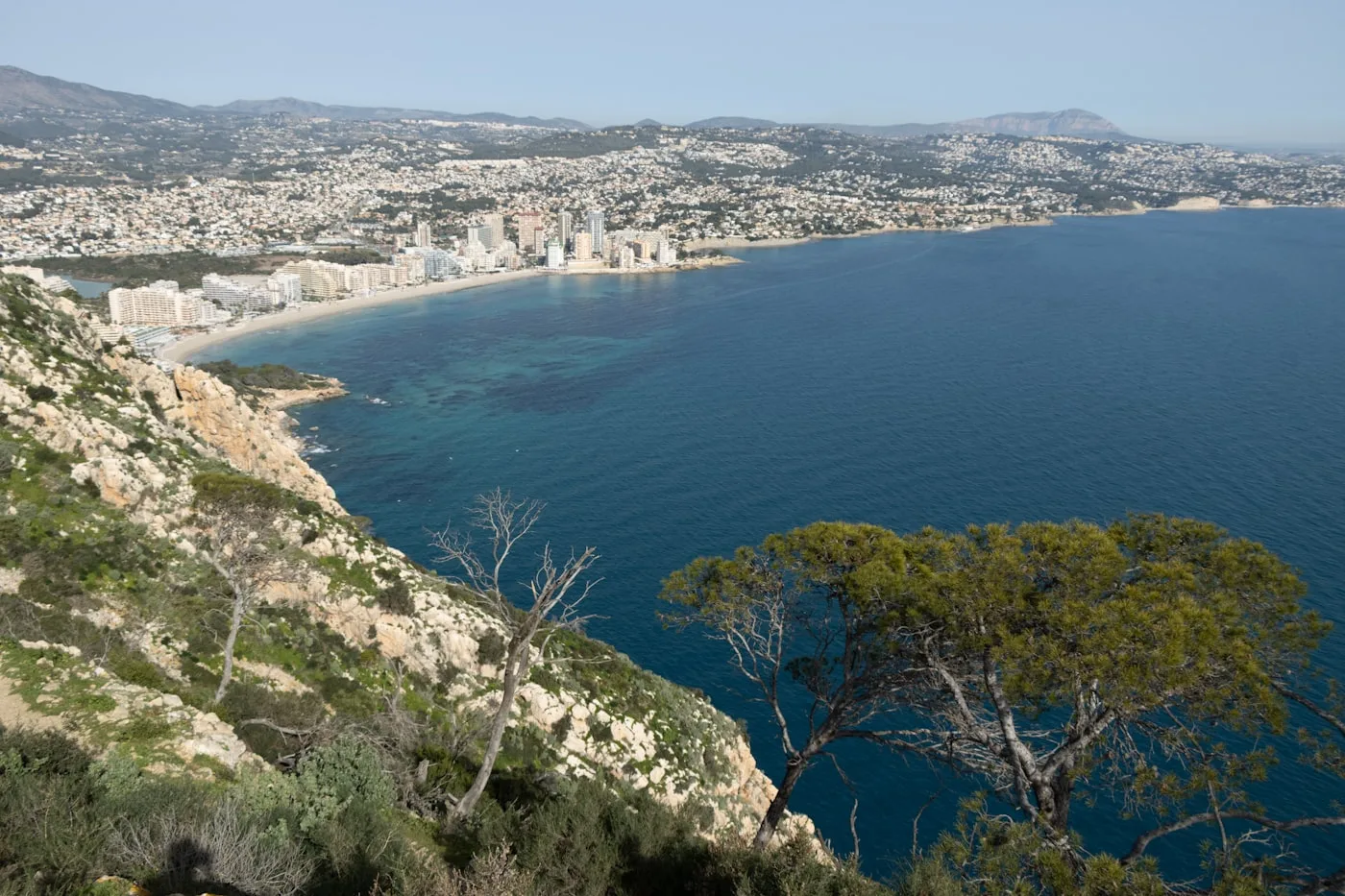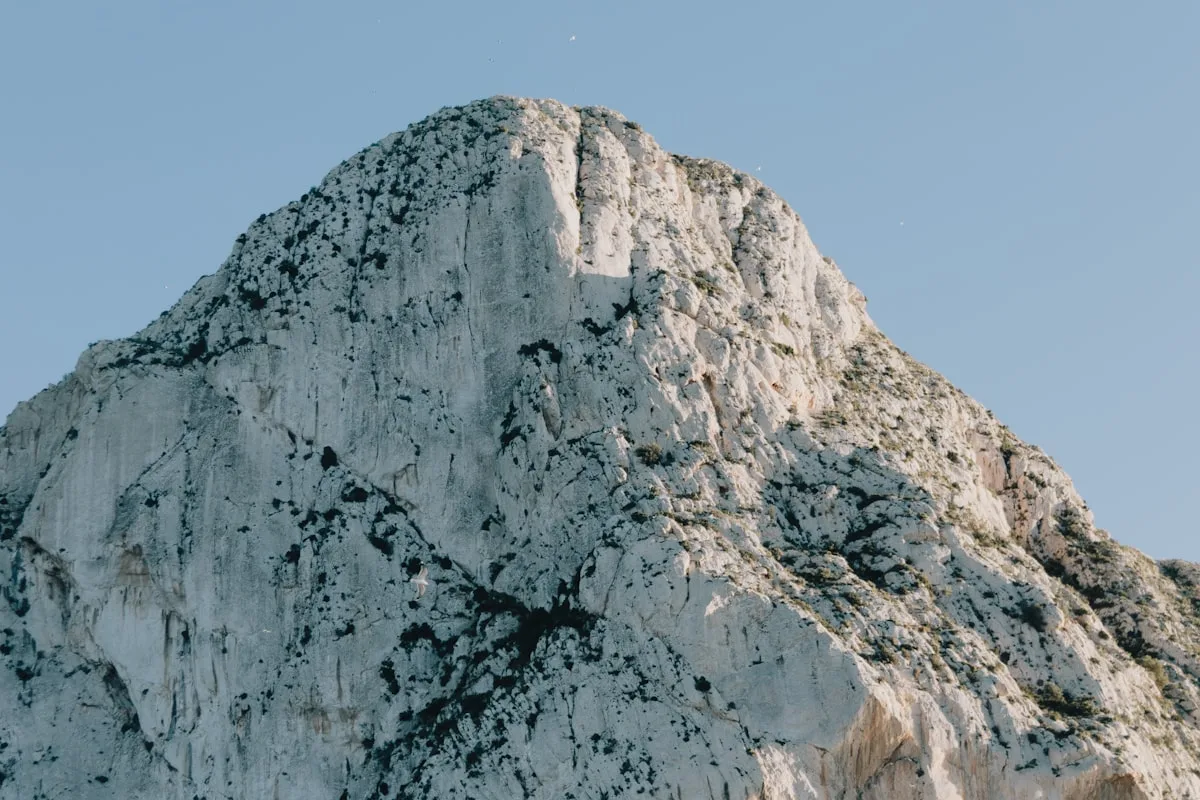
In photos, Calpe looks equally sunny all year round — the Peñón de Ifach rock, boats in the marina, the narrow lanes of the old town. In reality the town runs on a clear annual rhythm: the seasons feel genuinely different here, and the month you choose to travel decides whether you’ll actually swim, how much you’ll pay for a room, and whether you’ll be queuing for a table on the promenade. Here’s the year broken down season by season — a practical calendar for picking your own window.
Spring (March–May): mild, but too early to swim
March in Calpe means 17–18°C by day and cool evenings — a light jacket on the promenade is no bad idea. By May the air warms to 22–24°C, and a T-shirt is plenty during the day. The sea, though, lags a good two months behind the air: in March the water barely reaches 14°C, and by the end of May it’s around 18°C — still chilly for most people, though the hardiest are already in. What spring does give you is the valleys around Calpe — Jalón, Guadalest — bursting into orange blossom, so the old town smells of gardens rather than hot asphalt. Tourist numbers are noticeably lower than in summer: tables at restaurants are free without a booking, and accommodation prices haven’t yet climbed to their peak.
Summer (June–August): heat, crowds, and warm sea
June brings the real Spanish summer: a steady 27–30°C by day, with the thermometer often reaching 32–33°C in the shade during July and August — and it feels hotter still out in the open, on the promenade or on the climb up to the Peñón. The sea finally warms to a comfortable 24–26°C — these are the best months for swimming, no question. But this is exactly when Calpe changes the most: Arenal and La Fossa beaches fill up by ten in the morning, sun loungers are worth booking ahead, and prices for accommodation and car rental hit their yearly peak. If you’re travelling in August, allow extra time on the road — the routes into the coast get busier than usual.
Autumn (September–November): the best-kept secret
September and the first half of October are arguably Calpe’s best compromise. Daytime temperatures still sit at 25–27°C, the sea stays warm after summer — 23–24°C in September, around 21°C in October — and by this point the crowds have thinned out noticeably: school holidays across Europe are over, and the town settles back into a calmer rhythm, while restaurants, the promenade, and the Peñón trail are all still running at full capacity. By November the air drops to 18–19°C and the water to 17–18°C — too cool for most people to swim, but walking the promenade or climbing the rock is especially pleasant at this time, without the summer heat or the summer queue at the tunnel. One thing worth knowing: late September and October also bring most of the year’s rainfall — short, intense downpours rather than an all-day drizzle — so it’s worth packing an umbrella for this stretch, even though sunny days still far outnumber rainy ones.
Winter (December–February): mild, but not for the beach
By Northern European standards, a Calpe winter barely counts as winter: daytime temperatures usually run 15–17°C, sunny days clearly outnumber rainy ones, and on a calm day a terrace is perfectly comfortable without a coat. Swimming, though, is a different story — the sea cools to 14–15°C, leaving little besides a heated hotel pool. Some of the beach infrastructure closes for the season, but the old town and the promenade carry on year-round regardless. As for clothing, a light jacket for the evenings is enough — locals in Calpe already reach for a coat at 16°C, but visitors from colder climates will find that same temperature perfectly comfortable for a walk in a sweater. February has its own claim to fame here: it’s in February, not spring, that the almond trees bloom in the Jalón valley half an hour from Calpe — pink-and-white orchards on the hillsides that people travel here specifically to see, during the quiet season when tourists are scarce.
If you’re picking a single window for your trip, the rule of thumb is this: late May through June, or September through mid-October, give you the best combination of warm sea, comfortable air, and reasonable prices without the summer crush. That doesn’t mean other months aren’t worth it — in peak season you simply pay noticeably more for the same thing, and in winter and early spring you trade away a few degrees of sea temperature. What never changes is the transfer: Transfer Calpe runs from Alicante and Valencia airports to Calpe, Benidorm, and other Costa Blanca towns at a fixed price all year round, regardless of when you book — from €70 to €110 per car on the Alicante–Calpe route. Confirm your dates over WhatsApp or Telegram, and find more practical guides to the region on the blog.